
Wyatt asked for a robot for his sixth birthday. What he got from me instead was a plastic board, a bag of snap-together pieces, and a thin illustrated manual. The box said Elenco across the top and Snap Circuits Beginner underneath it. He looked at it the way he looks at socks.
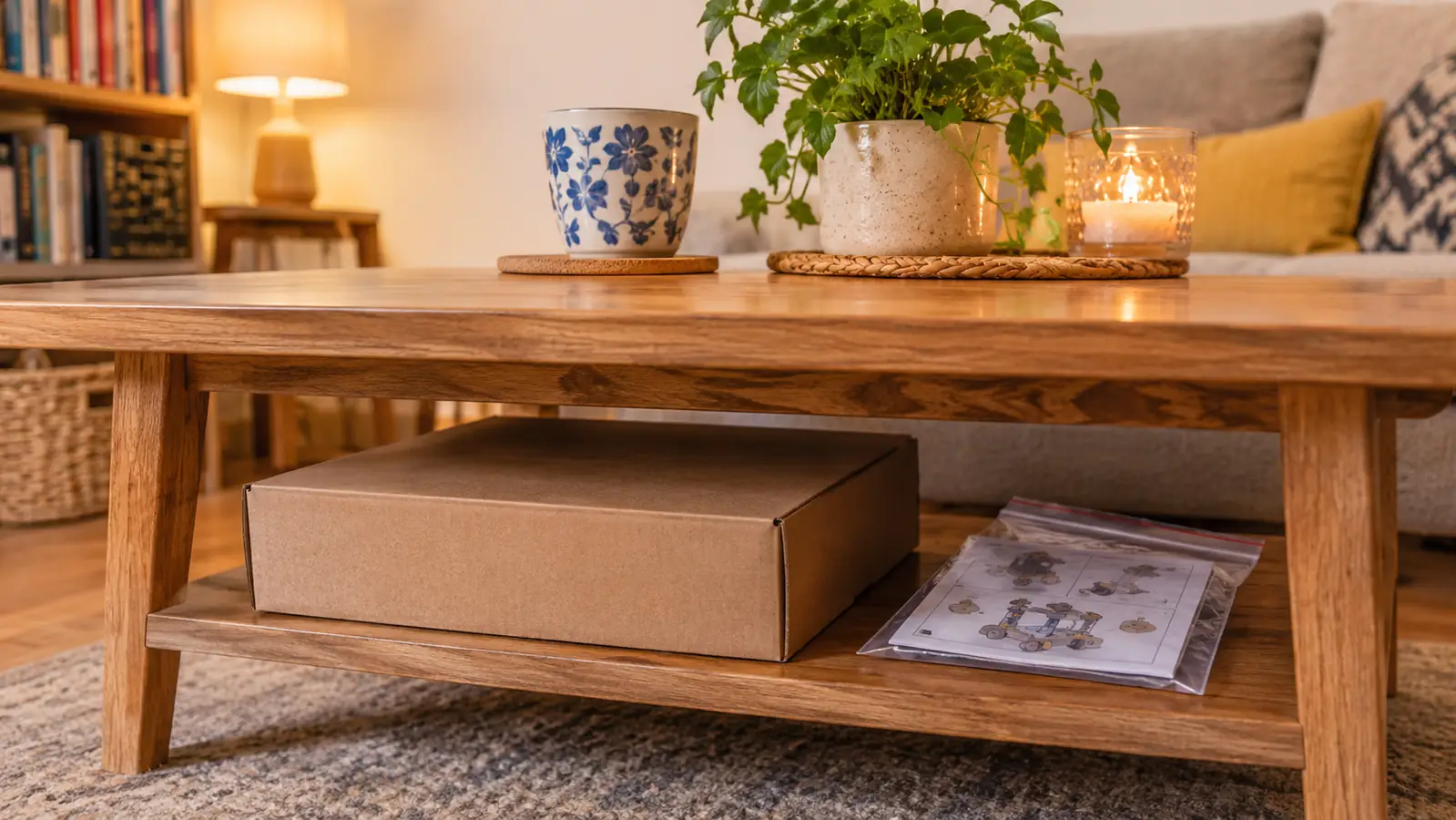
That was months ago. The box still lives on the shelf under the coffee table where he can reach it without asking, and it comes out most weeks. The robot his uncle sent in July is on top of the fridge now, dead battery, one arm missing. I am not saying the robot was a bad gift. I am saying I know which one got used.
The Quick Verdict
Plain packaging, no screen, no noise, and a six-year-old who keeps going back to it. The manual does the teaching and the plastic survives him. You will do the reading out loud for the first week.
Amazon Check Today's Price →The Toy That Outlasted His Attention Span
Snap Circuits Beginner is 21 projects, a base board, a set of snap modules, and a manual a kid can follow once somebody reads it to him. Ages 5 to 9. It is the one thing under my coffee table that gets picked up without me suggesting it.
Amazon Check Today's Price on Amazon →How I've Used It
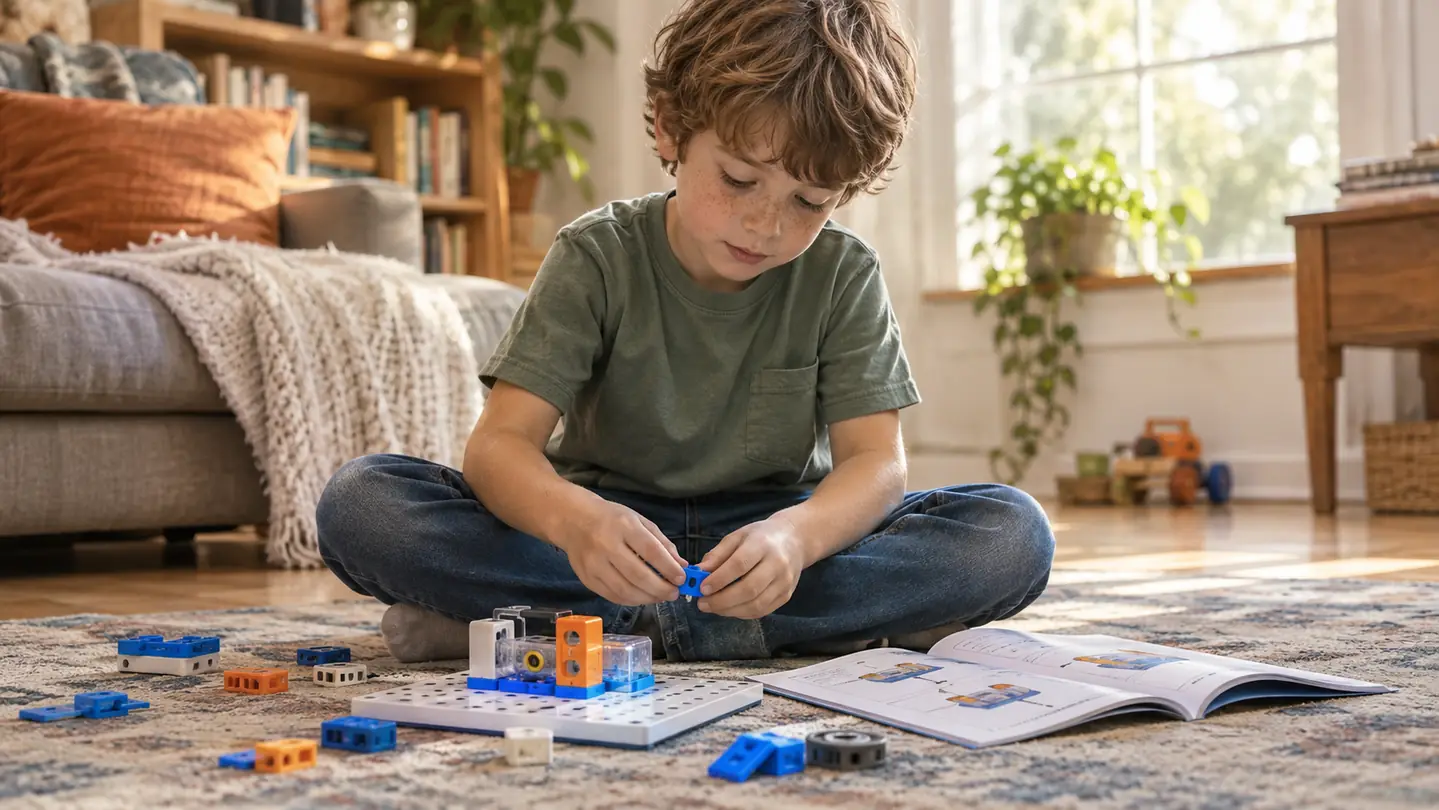
Most of the play happens on the living room rug. That is where the light is good and where I can see him from the kitchen while I am doing dishes. The base board sits flat on the carpet without rocking, which matters more than you would think, because Wyatt leans on everything he touches.
The manual goes into a ziplock bag when it is not in use. That was my idea after the first week, when I found it folded in half under a couch cushion. A kit like this is only as good as its instructions, and here the instructions are paper.
I have a rule about toys, and it comes from a lot of years watching kids come through a school cafeteria line. I do not judge a thing by the first hour. I judge it by whether it is still on the floor in week three. This one was still on the floor in week ten, which is the only reason I am bothering to write any of this down.
We also took it to the kitchen table on rainy days, and out to the backyard once, under the maple tree. That was a mistake. Small pieces and grass do not mix. The rug is the right place for it, and that is where it has stayed.
There is no tidy way to store it, which I will get to later, and the pieces do not go back in the box the way they came out. We ended up with a shallow tub on the shelf and the base board on top. It takes ten seconds to put away. If putting a toy away is hard, a toy does not get put away.
What's Actually in the Box
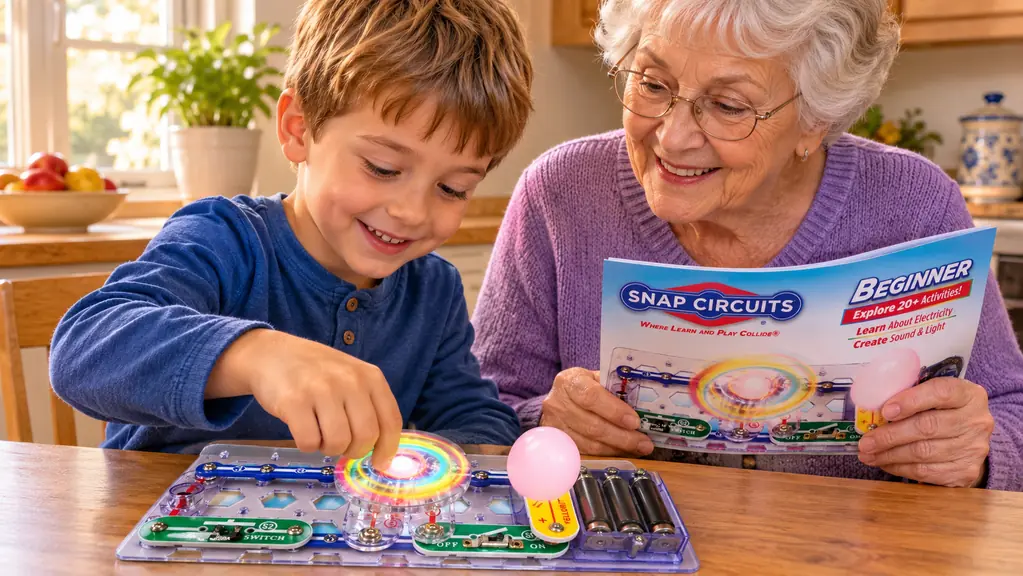
The kit is a base board, a set of snap modules, and the illustrated manual. That is the whole of it. It is plastic, the box weighs 0.23 kg, and nothing about opening it makes a fuss. There is no screen, no app to download, and nothing that quietly renews itself in the spring.
What it does have is a manual built in the right order for a six-year-old: pictures first, words second. Each project gets its own page. The page shows what to snap and where to put it. Wyatt could match the shapes long before he could read the sentence underneath, and that let him start on day one instead of waiting until he was a better reader.
The pieces seat on a numbered grid on the base board, and the manual uses the same numbering. That grid is what makes the thing teachable. He can see where a piece goes. He can also see, by looking at the page and then at the board, that he has skipped one. I did not have to hover over him.
Elenco has been making these kits a long time and it shows in small ways. The manual is stapled and cheap looking, but the pages are numbered, the projects are not crammed together, and the warranty covers defects in manufacture. I have not had to use it. Nothing has cracked yet, and this is a child who has dropped the base board down the porch steps.
One more thing about the manual, because it matters more than the box does. The projects are not just listed, they are explained. There is a short note with each one about what is happening and why. Wyatt does not read those notes yet. He will. I read one out loud to him last month and he asked me to read it again, which is the closest thing to a compliment I have had from him all year.
The 21 Projects, and How He Moved Through Them
There are 21 projects in the Beginner set. They start small and they stack. The first one is a piece or two. By the last pages the board is busy and the diagrams are denser. That build is the whole design of the kit, and it is why he did not get bored in the first week.
He did the first five with me reading out loud. By project eight he was turning the pages himself and only calling me when a piece would not seat. In the middle there was a stretch where he rebuilt the same three projects over and over instead of moving forward. I let him. Going back over old ground is how any of this sticks.
The pace suits his age. Twenty-one projects sounds like a lot until you realize the early ones take two minutes. That is on purpose, I think. He finished the first several in one sitting and felt like a genius, and that feeling carried him into the harder pages where he actually had to work at it.
The ones he returned to were the ones with a payoff at the end, where finishing the circuit makes something happen. I am not going to tell you which ones, because that part belongs to him and because your kid will pick different ones. What matters is that the payoff is on the page. A project that just sits there does not hold him. A project that does something holds him for twenty minutes.
He also invented his own. That is not what the manual is for, and about half the time nothing happened. But he was testing an idea, and he was not upset when it failed. He just went back to the book and started again.
I judge a toy by whether it is still on the floor in week three. This one was still on the floor in week ten.
What It Taught Him Without Him Noticing
The box lists what it is aiming at: concentration, construction skills, logical thinking, patterning, problem solving, and STEM. I read that and rolled my eyes, because every box in the toy aisle says something in that family. Then I watched him for a couple of months.
Here is what I actually saw. He learned to go back to the start. When a project did not work he did not throw it or stomp off. He pulled the pieces and began again from the first picture. He does not do that with building bricks. With bricks he builds his own idea, it collapses, and the afternoon is ruined.
He learned to follow a sequence, step one before step two. That is harder for him than it sounds. His first grade teacher told me in October that he wants to skip to the end of everything. This kit does not let you skip to the end. A missing piece means nothing happens, and you have to go back and find the piece.
The patterning one surprised me. He started noticing that certain pieces had to go together in a certain order, and after a while he could tell me which piece had to come first before he looked at the page. That is a small thing to watch happen in a six-year-old. It was not small to me.
And he learned that being wrong is not the end of the world, which is worth more to me than the other three put together.
How It's Held Up
Better than I expected. The pieces are plastic and they are thick. Nothing has cracked, no tab has snapped off, the base board still lies flat, and the modules still seat with the same firm press they did in the first week. Remember, this is a child who has used the manual as a ramp for a toy truck.
The cardboard box is the weakest of the lot. The lid has gone soft at the corners from being shoved back under the coffee table every week. A shallow plastic tub solved that for us. Small fix, not a complaint.
What has genuinely worn out is the paper, and I will come back to that in a minute, because it is the one thing I would change about this kit if I could.
Where It Falls Short
The manual is paper, and paper in a house with a six-year-old does not last. Ours has a crease down the middle of the first page and a corner torn clean off. Once a page is gone, the project on that page is gone with it. If Elenco sold a laminated version I would buy it tomorrow and I would pay extra for the privilege.
The pieces are small. Not dangerous for a six-year-old, but small enough to vanish. We lost one in September and did not find it until November, behind the radiator in the front room, and two of the later projects were on hold the whole time. There is also no proper storage. The box is sized for the pieces laid out flat, not for a kid shoving them back in. A tub fixed it. It should not have to be our job, but it was.
And the honest one: the Beginner set stops. Twenty-one projects is where it ends. Wyatt is already asking what comes next, and the answer is a bigger set with more parts and a bigger manual. That is not a flaw exactly. It is a fact about the kit, and you should know it before you start.
What I Liked
- He keeps coming back to it months later, without being asked
- The manual teaches in pictures, so a child who is not reading yet can start on day one
- The modules and base board have survived drops, steps, and being stepped on
- No screen, no app, and no subscription in a house that has enough of all three
- Light enough at 0.23 kg for a six-year-old to carry it to the kitchen table himself
- 21 projects that build in difficulty, so early wins carry him into harder pages
Where It Falls Short
- The paper manual will not last forever and a torn page takes a project with it
- Small pieces go missing and stall the later projects until they turn up
- The first week needs an adult reading out loud, and the kit sits if nobody does
- It ends at 21 projects, and he will ask for the next set up
- No real storage in the box, so plan on a shallow tub
Who This Is For
This is for a child who wants to know how things work and who can sit with a page for a few minutes. Wyatt is loud, busy, and rough on his belongings, and it still worked for him, so I would not rule out an active kid. But the child who gets the most out of it is the one who wants to finish a thing and see it work at the end.
It would also suit a child who is not reading yet but wants to be doing what an older sibling is doing. The pictures carry him. There is no reading requirement to get started, only a grown-up nearby for the first few pages.
And it is for the grown-up as much as the child. The kit is the toy, but you are the first teacher. If there is a grandparent or a parent in the house who will sit on the rug for a week and read out loud, this is one of the better ways I know to spend that week.
Who Should Skip It
Skip it if your child still puts small parts in his mouth, or if he is the sort who opens a box, dumps it, and is gone in four minutes. There is no screen here to pull him back. The kit asks something of him, and if he is not ready to give it, the box will sit on the shelf and you will be annoyed with me.
Skip it too if you want something he can do completely alone on the first day. At six he cannot, not without somebody reading the manual pages to him. If nobody in the house has that half hour, wait a year. The kit will still be there when he is seven.
Ten Weeks Later, It's Still the Box He Reaches For
Wyatt is six, he loses interest fast, and he is hard on everything he owns. Snap Circuits Beginner from Elenco is the one thing under my coffee table that gets opened without me suggesting it. Twenty-one projects, ages 5 to 9, no screen in sight.
Amazon Check Today's Price on Amazon →